Skip to Content

Just the Facts

Immigration Fact Checks provide up-to-date information on the most current issues involving immigration today.

New Americans in the Evergreen State

The Political and Economic Power of Immigrants, Latinos, and Asians in Washington

Immigrants and their children are growing shares of Washington’s population and electorate.
Read more...

Published On: Wed, Mar 10, 2010 | Download File

New Americans in the Show Me State

The Political and Economic Power of Immigrants, Latinos, and Asians in Missouri

Immigrants and their children are growing shares of Missouri’s population and electorate.
Read more...

Published On: Thu, Mar 04, 2010 | Download File

The 2010 Census: The Stakes of an Accurate Count

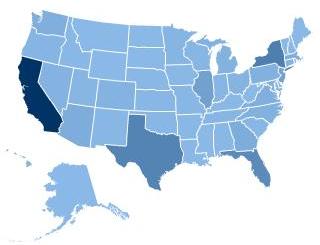
Every 10 years, as required by the U.S. Constitution, the federal government undertakes a massive nationwide effort to count the residents of the United States, who now number more than 300 million.  The results form the basis for the apportionment of congressional districts and the distribution of hundreds of billions of dollars in federal funds, as well as serving to guide a wide range of community-planning decisions across the country.DD  The Census is, however, no stranger to controversy, such as the suggestion by some activists that immigrants sit out the Census this year to protest the federal government’s failure to enact comprehensive immigration reform.DD  Yet, among demographic groups like immigrants and ethnic minorities who are typically under-counted in the Census, a boycott would be self-defeating.  Moreover, anyone living in an area afflicted by a large under-count of any sort stands to lose out on political representation and federal funds.DD  For instance, an undercount of Latino immigrants would impact anyone living in a state such as California, New York, or Illinois that has a large population of Latino immigrants—meaning that everyone in those states stands to lose political representation and access to economic and educational opportunities if their residents aren’t fully counted in 2010.

Reapportioning seats in Congress:Read more...

Published On: Wed, Mar 03, 2010 | Download File

How Expanding E-Verify Would Hurt American Workers and Business

Expanding mandatory E-Verify would threaten the jobs of thousands of U.S. citizens and saddle U.S. businesses with additional costs—all at a time when we need to stimulate our economy.  Expanding E-Verify now would be in direct contradiction to the goal of creating jobs and would slow America’s economic recovery.

E-Verify is bad for the economy and tax revenues:

  • The Congressional Budget Office (CBO) estimated that a mandatory E-Verify program would decrease federal revenues by $17.3 billion over 10 years due to the number of workers leaving the formal economy and working in the unregulated, untaxed underground economy.
  • The CBO’s predictions have come true in Arizona, where E-Verify is mandatory. Businesses are hiring workers off the books, which means they are not paying income or payroll taxes.
  • CBO also estimated that implementing mandatory E-Verify would cost $3 billion over 5 years and $6.1 billion over 10 years.

E-Verify will cost U.S. citizens and legal workers their jobs—the OPPOSITE of what is needed:
Read more...

Published On: Tue, Mar 02, 2010 | Download File

Immigration Reform and Job Growth

Legalizing Unauthorized Immigrants Would Boost the U.S. Economy

With the U.S. unemployment rate hovering at 10%, some have questioned whether or not now is really the right time for comprehensive immigration reform that includes the creation of a pathway to legal status for unauthorized immigrants already living in the United States.  Underlying this uncertainty is the fear that native-born Americans will lose out on scarce jobs if currently unauthorized immigrants acquire legal status—despite the obvious fact that unauthorized immigrants are already here and in the labor force.  However, the best available evidence suggests that neither legal nor unauthorized immigration is the cause of high unemployment, and that the higher wages and purchasing power which formerly unauthorized immigrants would enjoy were they to receive legal status would sustain new jobs. 

Immigrants are not the cause of high U.S. unemployment.

Immigration is not associated with high unemployment at the regional, state, or county levels.Read more...

Published On: Wed, Feb 24, 2010 | Download File

New Americans in the Sunflower State

The Political and Economic Power of Immigrants, Latinos, and Asians in Kansas

Immigrants and their children are growing shares of Kansas’s population and electorate.
Read more...

Published On: Mon, Feb 22, 2010 | Download File

Protecting Children in the Aftermath of Immigration Raids

Study Finds Significant Behavioral Changes in Children After Raids

Children of unauthorized immigrant parents are often forgotten in debates over immigration reform.  There are roughly 5.5 million children living in the United States with unauthorized immigrant parents—three-quarters of whom are U.S. born citizens.  These families live in constant fear of separation.  The Department of Homeland Security (DHS) estimates that over the last 10 years, more than 100,000 immigrant parents of U.S. citizen children have been deported from the United States.  

A new report by the Urban Institute, Facing Our Future: Children in the Aftermath of Immigration Enforcement, examines the consequences of parental arrest, detention, and deportation on 190 children in 85 families in six locations across the country. The report found that raids and other ICE actions that separate parents and children pose serous risks to children’s immediate safety, economic security, well-being, and long-term development. In most cases, two-parent homes became single-parent families after one parent was detained.  At least 20 families in the study were forced to decide whether children—many of whom are native born U.S. citizens—would leave the country with their deported parent or remain with the other parent or other relatives. The Urban Institute interviewed families affected by ICE actions at the following six sites: Read more...

Published On: Mon, Feb 22, 2010 | Download File

The Criminal Alien Program: Immigration Enforcement in Prisons and Jails

In The Criminal Alien Program: Immigration Enforcement in Travis County, Texas, author Andrea Guttin explores the Criminal Alien Program (CAP), which is one of the programs the Department of Homeland Security (DHS) uses to identify immigrants who may be deportable.  The paper provides a history and analysis of the CAP program, as well as a case study of CAP implementation in Travis County, Texas.

What is the Criminal Alien Program (CAP)?

CAP is a program administered by Immigration and Customs Enforcement (ICE) that screens inmates in jails, identifies deportable non-citizens, and places them into deportation proceedings.  CAP is one of fourteen federal/local law enforcement programs under the umbrella of ICE ACCESS (Agreements in Cooperation in Communities to Enhance Safety and Security).  CAP is active in all state and federal prisons, as well as more than 300 local jails throughout the country.

How does CAP work?Read more...

Published On: Wed, Feb 17, 2010 | Download File

Immigration Detainers: A Comprehensive Look

What is an immigration detainer and how does it work? Are detainers only placed on unauthorized immigrants? What happens after an immigration detainer has expired?  What are the consequences of immigration detainers?  In order to better understand immigration detainers’ function and impact, the Immigration Policy Center (IPC) provides the following Fact Check to shed much needed light on this often misunderstood immigration enforcement tool.

What is an immigration detainer?

An immigration detainer is a tool used by ICE and other Department of Homeland Security (DHS) officials to identify potentially deportable individuals who are housed in jails or prisons nationwide. An immigration detainer is an official request from Immigration and Customs Enforcement (ICE)  to another law enforcement agency (LEA)—such as a state or local jail —that the LEA notify ICE prior to releasing an individual from local custody so that ICE can arrange to take over custody.Read more...

Published On: Wed, Feb 17, 2010 | Download File

New Americans in the Last Frontier

The Political and Economic Power of Immigrants, Latinos, and Asians in Alaska

Immigrants and their children are growing shares of Alaska’s population and electorate.
Read more...

Published On: Tue, Feb 16, 2010 | Download File