Skip to Content

The Basics

The Systematic Alien Verification for Entitlements (SAVE) Program: A Fact Sheet

Immigration law is highly complex. Determining which non-citizens are “lawfully” or “unlawfully” present and whether they should be allowed to stay in the United States are complex matters which involve the interpretation of a range of federal laws and regulations, broad policy considerations, and prioritization of existing resources, to name just a few considerations.

Alabama and other states that have passed harsh anti-immigration laws don’t understand this complexity. State legislators seem to want a fast, simple answer to the question of whether someone is lawfully or unlawfully present in the United States. These states are planning to lean heavily on the Systematic Alien Verification for Entitlements (SAVE) program or some other system of verification, such as E-verify, as the mechanism for determining whether someone is unlawfully present in the country.

But there is no magic database or system that gives the simple, speedy determination of unlawful presence that states crave. The SAVE program, operated by the United States Citizenship and Immigration Services (USCIS), does not and was never designed to meet these needs. SAVE can only verify immigration status or immigration information at a particular point in time, and cannot determine whether someone is unlawfully present in the U.S. E-Verify is a federal database that can only be used to verify a worker’s authorization to work in the U.S.Read more...

Published On: Thu, Dec 15, 2011 | Download File

Secure Communities: A Fact Sheet

Updated 11/29/11 - While the implementation by Immigration and Customs Enforcement (ICE) of the state/local partnership agreements known as the 287(g) program has been a source of great controversy, it is far from the only tool ICE uses to engage state and local law enforcement in immigration control.  Most notably, the Secure Communities Program, which launched in March 2008, has been held out as a simplified model for state and local cooperation with federal immigration enforcement. This fact sheet lays out the basics of Secure Communities program, how it works, key areas of concern and recommendations on how to improve the program. Read more...

Published On: Tue, Nov 29, 2011 | Download File

Immigration and the Defense of Marriage Act (DOMA): A Q&A Fact Check

Q: What is the Defense of Marriage Act?
A: In 1996, Congress passed the Defense of Marriage Act (DOMA). Section 3 of DOMA defines marriage as a legal union between one man and one woman. At the time DOMA was enacted, no state permitted same-sex marriages. Today, six states and the District of Columbia permit same-sex marriages; several other states honor out-of-state marriages and/or recognize civil unions.

Q: How does DOMA affect immigration cases?
A: There are approximately 36,000 same-sex binational couples living in the United States, and approximately half of these couples are raising children.

Because immigration law is federal, the immigration agencies apply DOMA’s definition of marriage. This means that even gay and lesbian couples who are lawfully married are not considered married for immigration purposes. As a result, gay and lesbian U.S. citizens and permanent residents cannot successfully petition for their spouses; same-sex spouses cannot accompany their American spouse who receives a family or employment-based visa; and lesbian and gay noncitizens cannot obtain a waiver or relief from removal based on their marriage. Essentially, DOMA prevents same-sex couples from receiving the same immigration benefits that different-sex couples receive.Read more...

Published On: Thu, Aug 18, 2011 | Download File

The Diversity Visa System: A Fact Sheet

What is the diversity visa lottery?

The diversity visa lottery was created to encourage legal immigration to the U.S. from countries other than the major immigrant sending countries.  The current immigration system favors individuals who have close relationships with family members or employers in the U.S.  People who do not have close family or employment in the U.S. have very few opportunities for permanent, legal immigration to the U.S.

The diversity immigrant category was created by the Immigration Act of 1990 (P.L. 101-649) to stimulate “new seed” immigration from parts of the world that are under-represented in the U.S.  The Nicaraguan Adjustment and Central American Relief Act of 1997 (NACARA) temporarily reduced the 55,000 annual ceiling by up to 5,000 annually to offset immigrant visa numbers for certain NACARA beneficiaries.  As of now, the diversity visa ceiling is still set at 50,000, and it is unclear how many more years the offset will continue.

The diversity lottery makes visas available each year to natives of countries with fewer than 50,000 total immigrant admissions over the preceding five years.  Natives of Mexico, India, China, and other countries that send large numbers of immigrants to the U.S. are not eligible.

 Who is eligible for a diversity visa?
Read more...

Published On: Mon, Apr 04, 2011 | Download File

Employment-Based Immigration to the United States: A Fact Sheet

U.S. law provides employers with several limited ways to bring foreign workers into the U.S. on a temporary or permanent basis. Employment-based immigration visa categories generally have limited and static numerical caps. In addition, before petitioning for a foreign worker, an employer is often required to obtain certification from the Department of Labor (DOL) that there are no U.S. workers available, willing, and qualified to fill the position at a wage that is equal to or greater than the prevailing wage generally paid for that occupation in the geographic area where the position is located. The purpose of this restriction is to demonstrate that the admission and hiring of foreign workers will not adversely affect the job opportunities, wages, and working conditions of U.S. workers.    Read more...

Published On: Tue, Mar 29, 2011 | Download File

The Unauthorized Population Today

Number Holds Steady at 11 million, Three-Fifths Have Been Here More Than a Decade

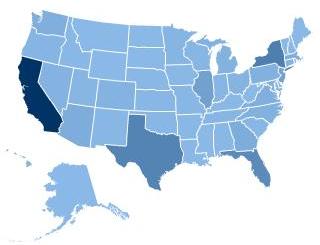
Recent estimates from the Pew Hispanic Center and the Department of Homeland Security (DHS) indicate that the number of unauthorized immigrants in the United States has remained unchanged at roughly 11 million since 2009.  This comes after a two-year decline of approximately one million that corresponded closely to the most recent recession, which ran from December 2007 to June 2009.  Despite that decline, the new data make clear that the current population of unauthorized immigrants is very much part of the social and economic fabric of the country.  Three-fifths of unauthorized immigrants have been in the United States for more than a decade.  Unauthorized immigrants comprise more than one-quarter of the foreign-born population and roughly 1-in-20 workers.  Approximately 4.5 million native-born U.S.-citizen children have at least one unauthorized parent.  While the largest numbers of unauthorized immigrants are concentrated in California and Texas, there also are sizable unauthorized populations in Florida, New York, New Jersey, Illinois, Georgia, North Carolina, and Maryland.  In short, unauthorized immigrants who are already in the country have become integral to U.S. businesses, communities, and families.

The size of the unauthorized population has remained unchanged at roughly 11 million since 2009.Read more...

Published On: Tue, Mar 22, 2011 | Download File

How the United States Immigration System Works: A Fact Sheet

U.S. immigration law is very complex, and there is much confusion as to how it works.  The Immigration and Naturalization Act (INA), the body of law governing current immigration policy, provides for an annual worldwide limit of 675,000 permanent immigrants, with certain exceptions for close family members.  Congress and the President determine a separate number for refugee admissions.  Historically, immigration to the United States has been based upon three principles: the reunification of families, admitting immigrants with skills that are valuable to the U.S. economy, and protecting refugees.  This fact sheet provides basic information about how the U.S. legal immigration system is designed. Read more...

Published On: Thu, Nov 04, 2010 | Download File

Refugees: A Fact Sheet

What is a refugee?

A refugee, as defined by Section 101(a)42 of the Immigration and Nationality Act(INA) (based on  the  United Nations 1951 Convention and 1967 Protocols  relating to the Status of Refugees) is a person who is  unable or unwilling  to return to the home country because of a “well-founded fear of persecution” due to race, membership in a particular social group, political opinion, religion, or national origin. Read more...

Published On: Thu, Oct 21, 2010 | Download File

Giving Facts a Fighting Chance: Answers to the Toughest Immigration Questions

This comprehensive Q&A guide reviews the most current research available, debunks myths, and answers some of the most common immigration-related questions, including those about worksite enforcement, border security, birthright citizenship, access to public benefits, immigrant criminality, immigrant integration and the economic impacts of immigration.

Americans are justifiably frustrated and angry with our outdated and broken immigration system.  The problem is complex, and a comprehensive, national solution is necessary.  Politicians who suggest that the U.S. can deport its way out of the problem by removing 11 million people are unrealistic.  The U.S. needs a fair, practical solution that addresses the underlying causes of unauthorized immigration and creates a new, national legal immigration system for the 21st century.

Published On: Tue, Oct 12, 2010 | Download File

Immigrant Women in the United States: A Portrait of Demographic Diversity

The 18.9 million immigrant women and girls in the United States in 2008 present a portrait of demographic diversity on many fronts.  An analysis of Census Bureau data reveals that immigrant women are not easily categorized or stereotyped—and that many common myths about immigrants are shattered when we look carefully at the demographic diversity of these women.

Read more...

Published On: Mon, Jun 28, 2010 | Download File