Skip to Content

Integration and Citizenship

Improving the Naturalization Process: Better Immigrant Integration Leads to Economic Growth

Anyone who has ever attended a naturalization ceremony cannot help but be moved by the power of the moment. The participants enter as men, women, and children of diverse countries, but leave the room as citizens of one—the United States. For many, the path to that naturalization ceremony has been long and arduous, irrespective of whether they entered the United States as wealthy entrepreneurs or as refugees with nothing but the clothes on their backs. The process of obtaining lawful permanent resident (LPR) status, and ultimately U.S. citizenship, is often daunting. A new country, new rules, high costs, and little targeted support for new immigrants makes what should be a journey of exploration and opportunity one that may be frustrating and lonely. Consequently, in order to focus on ways to improve the naturalization process itself, we must take a step back and consider the nature of immigrant integration in the United States. The better our integration policies—and the sooner they begin—the more likely we are to improve the rate of naturalization. 

Published On: Mon, Sep 19, 2011 | Download File

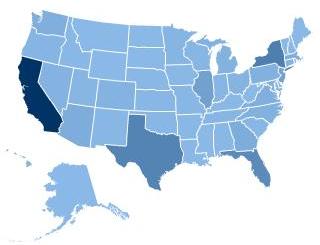
The Migrant Integration Policy Index (MIPEX III)

How U.S. Integration Policy Stacks Up Against Other Countries

Integration is an often overlooked but key component of U.S. immigration policy. Successful integration of immigrants fuels their success, strengthens communities, and builds bridges between newcomers and other community members. Time and again, the influx of immigrants into a community has been shown to reverse economic decline and breathe new life into urban areas, small towns, and rural communities. Moreover, integration can be a key to entrepreneurship and future economic growth. For example, research by Richard Florida and Charlotta Mellander found that nations which focus more on immigrant integration have higher levels of economic competitiveness, are more innovative, and have higher rates of entrepreneurship. Understanding how federal and state laws facilitate or hinder integration is therefore an important component of setting integration policy.Read more...

Published On: Mon, May 09, 2011 | Download File

Reforming America's Immigration Laws: A Woman's Struggle

While immigrant communities across the nation endure the long wait for immigration reform, there are roughly 19 million immigrant women and girls currently in the U.S. Immigrant women, particularly the undocumented, are often more vulnerable than their male counterparts, lack the same economic opportunities, and experience exploitation while crossing the border, while working and even in their own homes. In short, immigrant women have become the silent victims of a broken immigration system.

In this IPC report, immigration attorney Kavitha Sreeharsha lays out the economic and social disparities, legal barriers to current immigration law and the many dangers hard-working immigrant women are forced to endure.

The report also explores how women are distinctly harmed by heightened enforcement of immigration laws. Abusers, traffickers, and exploitative employers keep immigrant women from seeking local law-enforcement protection by convincing them that police officers are working in partnership with DHS and will deport victims instead of protecting them. Essentially, these enforcement measures increase the likelihood of abuse and assault against immigrant women by cutting them off from help and giving their perpetrators a powerful tool to silence their victims and escape prosecution.

Ultimately, the author concludes, only through a comprehensive immigration reform package—one that includes a path to legalization that values the contributions immigrant woman make as mothers, wives and workers—can the U.S. reconcile these disparities.

Published On: Mon, Jun 28, 2010 | Download File

Arizona's Anti-Immigration Law is also Anti-Faith

While visiting Phoenix, AZ in late January with a group of evangelical leaders who were in the border region to learn more about immigration, I met an immigrant family struggling to survive in a difficult economy. The father was employed as a mechanic but recently lost his job and lived in constant fear of being separated from his two young children who are U.S. citizens. This man considered moving his family back to Mexico because life was so hard in Phoenix, but was concerned about his two young children who would go back to a country they never knew. They were generous in feeding a group of American visitors delicious homemade Mexican food, as their children ran around the yard, yelling at each other in a mix of Spanish and English. During the same visit, my colleague met an undocumented immigrant woman named Maria whose son was killed by a drunk driver. She cannot press charges, however, because of her undocumented status.Read more...

Published On: Thu, Jun 17, 2010 | Download File

The Lasting Impact of Mendez v. Westminster in the Struggle for Desegregation

Years before the U.S. Supreme Court ended racial segregation in U.S. schools with Brown v. Board of Education, a federal circuit court in California ruled that segregation of school children was unconstitutional—except this case involved the segregation of Mexican American school children.  The Ninth Circuit Court of Appeals reached this historic decision in the case of Mendez v. Westminster in 1947—seven years before Brown.  Historic in its own right, Mendez was critical to the strategic choices and legal analysis used in arguing Brown and in shaping the ideas of a young NAACP attorney, Thurgood Marshall.   Moreover, the Mendez case—which originated with LULAC but benefited from the participation of the NAACP—also symbolized the important crossover between different ethnic and racial groups who came together to argue in favor of desegregation.

From a legal perspective, Mendez v. Westminster was the first case to hold that school segregation itself is unconstitutional and violates the 14th Amendment.   Prior to the Mendez decision, some courts, in cases mainly filed by the NAACP, held that segregated schools attended by African American children violated the 14th Amendment’s Equal Protection Clause because they were inferior in resources and quality, not because they were segregated. Read more...

Published On: Thu, Mar 25, 2010 | Download File

Naturalization and Integration: Repairing our Broken Immigration System

Most Americans want immigrants to fully integrate in the U.S., and most immigrants want to be Americans and fully participate in social and civic life.  We can expect naturalization and integration programs to be an important part of comprehensive immigration reform. Immigrant integration benefits everyone because it enables immigrants to realize their full potential, contribute more to the U.S. economy, and develop deeper community ties.  While the United States encourages legal permanent residents to become citizens, there is no national strategy for facilitating integration and insufficient infrastructure to facilitate a smooth transition from immigrant to citizen. Failure to address this problem in the context of comprehensive immigration reform could lead to endless delays for the millions who currently seek services from USCIS and the millions more who will become part of the applicant pool following legalization.

Read more...

Published On: Thu, Dec 03, 2009 | Download File

Essential to the Fight: Immigrants in the Military Eight Years After 9/11

From the Revolutionary War to the current conflicts in Afghanistan and Iraq, immigrants have made significant contributions to the United States by serving in our military forces. Today, immigrants voluntarily serve in all branches of the U.S. military and are a vital asset to the Department of Defense. To recognize their unique contribution, immigrants serving honorably in the military who are not yet U.S. citizens are granted significant advantages in the naturalization process. Over the past eight years, Congress has amended military-related enlistment and naturalization rules to allow expanded benefits for immigrants and their families and encourage recruitment of immigrants into the U.S. Armed Forces. Without the contributions of immigrants, the military could not meet its recruiting goals and could not fill its need for foreign-language translators, interpreters, and cultural experts. This latest Special Report reflects on the vital role immigrants have and continue to play in keeping our nation safe.

Published On: Mon, Nov 09, 2009 | Download File

Earned Legalization: Repairing our Broken Immigration System

We can expect every major piece of comprehensive reform legislation to tackle the issue of creating a legal status for the 11- 12 million undocumented immigrants residing in the United States.  Ultimately, most politicians and policy makers agree that practically, the U.S. cannot deport this population, and some kind of process for legalizing status is necessary.  However, there remains a temptation to create high penalties in exchange for a green card because many politicians want to ensure that people have paid the price for coming to the country illegally.  An overly punitive process, however, ultimately defeats the purpose of a legalization program because it will deter people from participating and potentially drive people further underground.  A successful legalization program combines measured penalties with clear and achievable goals that will get the maximum number of people into the system, identify the relatively few who do not belong here based on criminal activity,  and integrate those who can contribute their talents as quickly as possible. 

Read more...

Published On: Thu, Nov 05, 2009 | Download File

American Roots in the Immigrant Experience

The U.S. Census Bureau recently released data on the Latino population of the United States that underscores the extent to which the immigrant experience is embedded in the social (and political) fabric of the United States. The political significance of these statistics is apparent in the most recent IPC Fact Check. Latinos comprise the fastest-growing group of voters in the United States. The number of naturalized U.S. citizens is increasing rapidly and the electoral clout of New American voters who share a direct, personal connection to the immigrant experience—that is, naturalized citizens and the U.S.-born children of immigrants—is on the rise.

Published On: Mon, Oct 19, 2009 | Download File

Record-Breaking Number of Immigrants Seek Integration, U.S. Citizenship

September 17th is Citizenship Day—a day to recognize and celebrate all of the immigrants who have chosen to integrate fully and become U.S. citizens.  While some fear that demographic shifts threaten American identity, research and experience have shown that today’s immigrants integrate into American society just like generations of immigrants before them.  Citizenship Day is a time to celebrate the many immigrants who have taken a step toward full integration and participation in U.S. civic life. 

Read more...

Published On: Tue, Sep 16, 2008 | Download File