Skip to Content

State and Local

Bad for Business: How Mississippi’s Proposed Anti-Immigration Laws Will Stifle the State Economy

While proponents of harsh immigration bills in Mississippi claim that passing these laws would save the state money, experience from other states shows these immigration laws will actually cost the state millions of dollars. Implementing the laws and defending them in the courts would cost Mississippi’s taxpayers millions they can ill afford. The laws would make it more difficult for businesses to operate in the state and would deter investment. The loss of taxpayers and consumers would devastate Mississippi’s economy. 

After the legislatures in Arizona, Alabama, and other states approved their immigration-control bills, these states experienced negative economic consequences. Meanwhile, other states have considered similar proposals, but abandoned them after concluding that the economic and enforcement costs would prove too high. 

Harsh immigration laws will harm Mississippi’s economy.
Read more...

Published On: Thu, Feb 02, 2012 | Download File

Responding to State Immigration Legislation: A Resource Page

As states across the country continue to consider harmful immigration enforcement legislation, it’s critical that lawmakers consider the facts. The following resources provide key answers to basic questions about state immigration-related laws—from the substance of the legislation and myths surrounding the debate to the legal and fiscal implications.

Read more...

Published On: Thu, Feb 02, 2012 | Download File

The Systematic Alien Verification for Entitlements (SAVE) Program: A Fact Sheet

Immigration law is highly complex. Determining which non-citizens are “lawfully” or “unlawfully” present and whether they should be allowed to stay in the United States are complex matters which involve the interpretation of a range of federal laws and regulations, broad policy considerations, and prioritization of existing resources, to name just a few considerations.

Alabama and other states that have passed harsh anti-immigration laws don’t understand this complexity. State legislators seem to want a fast, simple answer to the question of whether someone is lawfully or unlawfully present in the United States. These states are planning to lean heavily on the Systematic Alien Verification for Entitlements (SAVE) program or some other system of verification, such as E-verify, as the mechanism for determining whether someone is unlawfully present in the country.

But there is no magic database or system that gives the simple, speedy determination of unlawful presence that states crave. The SAVE program, operated by the United States Citizenship and Immigration Services (USCIS), does not and was never designed to meet these needs. SAVE can only verify immigration status or immigration information at a particular point in time, and cannot determine whether someone is unlawfully present in the U.S. E-Verify is a federal database that can only be used to verify a worker’s authorization to work in the U.S.Read more...

Published On: Thu, Dec 15, 2011 | Download File

Bad for Business: How Alabama’s Anti-Immigrant Law Stifles State Economy

Although key provisions of Alabama’s HB 56 are on hold while its constitutionality is being tested in the courts, evidence is mounting of the growing fiscal and economic impact of the new law. State economic experts and business leaders agree that the law has already caused hardship for Alabama’s businesses and citizens.
Read more...

Published On: Wed, Nov 09, 2011 | Download File

Turning Off the Water: How the Contracting and Transaction Provisions in Alabama's Immigration Law Make Life Harder

Turning Off the Water: How the Contracting and Transaction Provisions in Alabama's Immigration Law Make Life Harder For Everyone

By Joan Friedland

Since passage of HB 56, Alabama’s extreme new immigration law, many are aware of the most immediate consequences of the law—rotting tomatoes, racial profiling, and frightened school children. However, two provisions of the law that have the potential to be extremely damaging to the state’s economy, rule of law, and municipal functioning have received comparatively little attention. These two provisions have been in effect since September 30,, 2011, and are likely to result in an increase of exploitation of workers, erosion of fundamental legal protections, and denial of access to state and local government services and activities. In other words, these provisions will undoubtedly impact the daily lives of all Alabamians.Read more...

Published On: Tue, Nov 01, 2011 | Download File

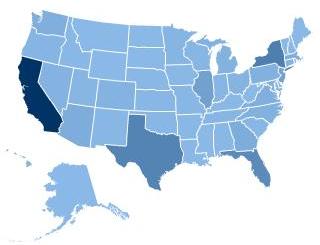
Revitalizing the Golden State

California is home to nearly 10 million immigrants, more than one quarter of the state’s population. Of those, 2.7 million are undocumented, and the vast majority of them have been living in the United States for more than 10 years. California’s immigrant contributions to the Golden State cannot be overstated. From Cesar Chavez, the pioneering agricultural labor-rights leader in the 20th century to Sergei Brin, the Russian entrepreneur behind one of the 21st century’s most revolutionary companies, Google Inc., the foreign born and their descendants are woven into the state’s cultural and economic fabric. 

Still, that reality has not prevented some Californians, frustrated with our broken federal immigration system, to call for an Arizona-style “papers please” approach. The stated goal of this new wave of state-based enforcement legislation is to trigger a mass exodus of undocumented immigrants, by making “attrition through enforcement” the policy of state and local government agencies. The threshold question that proponents of S.B.1070-style legislation have failed to answer is whether that goal serves the economic interests of the state’s constituents.Read more...

Published On: Wed, Apr 27, 2011 | Download File

Q&A Guide to State Immigration Laws

In April 2010, Arizona governor Jan Brewer signed the Support Our Law Enforcement and Safe Neighborhoods Act, a tough new immigration law widely known as SB1070.  One year after passage of the law, both opponents and proponents are still attempting to assess its impact on the residents of Arizona—native-born U.S. citizens and immigrants alike.  Furthermore, despite criticism of SB1070 from Republicans, Democrats, police officials, religious leaders, and civil-rights leaders, legislators in many states have introduced or are considering introducing similar legislation.  Read more...

Published On: Tue, Apr 26, 2011 | Download File

Q&A Guide to Arizona's Immigration Law

One year after the passage of Arizona’s tough new immigration law (SB1070), both opponents and proponents are attempting to assess the impact the new law may have on residents of Arizona—citizens and immigrants alike.  A federal district court ruling preliminarily enjoined large parts of the controversial law, meaning that those portions of the new law cannot be implemented, and the Ninth Circuit Court of Appeals upheld the preliminary injunction.  Other lawsuits have been filed challenging the constitutionality of the law and have yet to be ruled on, opponents have mounted boycotts, and numerous polls show that a majority of the public both supports the Arizona law and comprehensive immigration reform.  Furthermore, despite criticism of SB1070 from Republicans, Democrats, police officials, religious leaders, and civil-rights leaders, legislators in many states have introduced or are considering introducing similar legislation.
Read more...

Published On: Tue, Apr 26, 2011 | Download File

Constitutional Citizenship: A Legislative History

Attacks against the Citizenship Clause of the 14th Amendment have picked up in recent months, with legislators at both the national and state levels introducing bills that would deny U.S. citizenship or “state citizenship” to the children born to unauthorized immigrants in the U.S.

There are two strands of attacks on birthright citizenship.  One strand arises out of simple nativist anger at the impact of immigrants, legal or otherwise, on society.  The other argues that the current interpretation of the Citizenship Clause as covering the children of “illegal” immigrants is inconsistent with the “original intent” of the Framers of the 14th Amendment.  Originalism is often used as a method to clarify unclear portions of constitutional text or to fill contextual gaps in the document. This is not, however, how originalism is being used in the context to the Citizenship Clause.  Here, originalists use clever arguments and partial quotations to eradicate the actual text of the Amendment.  In essence, they claim the Framers did not really mean what they said. Read more...

Published On: Mon, Mar 28, 2011 | Download File

Eliminating Birthright Citizenship Would Not Solve the Problem of Unauthorized Immigration

There is no evidence that undocumented immigrants come to the U.S. just to give birth.

  • Unauthorized immigrants come to the U.S. to work and to join family members.  Immigrants tend to be of child-bearing age and have children while they are in the U.S.  They do not come specifically to give birth.
  • Stories about “birth tourism” point to small numbers of foreigners who come to the U.S. legally to give birth to their children.  It would be ridiculous to change the U.S. Constitution and impact every single American just to punish a few individuals.
  • “Anchor babies” are a myth.
  • U.S.-citizen children do not protect their parents from deportation.  Every year the U.S. deports thousands of parents of U.S. citizens. 
  • U.S.-born children cannot petition for legal status for their parents until they turn 21 years old.  In most cases, if the petition is granted the parents would still have to leave the U.S. and then be barred from re-entering for at least 10 years.  That’s a total of 31 years.  Undocumented immigrants do not come to the U.S. to give birth as part of a 31-year plan.

Eliminating birthright citizenship would INCREASE the undocumented population.Read more...

Published On: Tue, Jan 04, 2011 | Download File