Skip to Content

Economics of Immigration

Bad for Business: How Mississippi’s Proposed Anti-Immigration Laws Will Stifle the State Economy

While proponents of harsh immigration bills in Mississippi claim that passing these laws would save the state money, experience from other states shows these immigration laws will actually cost the state millions of dollars. Implementing the laws and defending them in the courts would cost Mississippi’s taxpayers millions they can ill afford. The laws would make it more difficult for businesses to operate in the state and would deter investment. The loss of taxpayers and consumers would devastate Mississippi’s economy. 

After the legislatures in Arizona, Alabama, and other states approved their immigration-control bills, these states experienced negative economic consequences. Meanwhile, other states have considered similar proposals, but abandoned them after concluding that the economic and enforcement costs would prove too high. 

Harsh immigration laws will harm Mississippi’s economy.
Read more...

Published On: Thu, Feb 02, 2012 | Download File

Immigrant Entrepreneurs: Creating Jobs and Strengthening the Economy

By Marcia Hohn, Ed.D.
Director, Public Education Institute at The Immigrant Learning Center, Inc.

There is widespread agreement across a number of key economic planning groups that immigrant entrepreneurs create jobs and strengthen the economy. Yet, the U.S. immigration system often forces out immigrant entrepreneurs, driving them to other countries that are competing for international talent. Although many people recognize the giants of immigrant entrepreneurship, such as Sergey Brin of Google and Pierre Omidyar of eBay, thousands of other science and technology businesses are quietly making a difference by creating almost half a million jobs for Americans and generating revenue of more than $50 billion. The depth and breadth of immigrant entrepreneurs extend across the spectrum of enterprises, including neighborhood, growth, and transnational businesses. Expansion of employment-based visas would allow companies’ access to high-potential foreign individuals who are graduates of U.S. universities. Businesses, cities, and states across the country should support changes in visa policy and work to develop partnerships with immigrant entrepreneurs to create jobs and strengthen the economy.Read more...

Published On: Wed, Jan 25, 2012 | Download File

Immigration, Entrepreneurship and Job Growth: A Resource Page

As America’s economic recovery continues to be a national priority, leaders on both sides of the aisle need to continue looking at immigration reform as a strategy for promoting job creation and growth. If Congress is serious about our nation’s economic recovery, they must earnestly consider and debate real immigration legislation with the goal of creating more investment opportunities and spurring innovation and entrepreneurship. The following resources provide the basics of employment-based immigration and explain how immigrants have and will continue to play a significant role in the economic well-being of the United States.Read more...

Published On: Tue, Jan 24, 2012 | Download File

Value Added: Immigrants Create Jobs and Businesses, Boost Wages of Native-Born Workers

(Updated January 2012) - Immigrants are not the cause of unemployment in the United States. Empirical research has demonstrated repeatedly that there is no correlation between immigration and unemployment. In fact, immigrants—including the unauthorized—create jobs through their purchasing power and their entrepreneurship, buying goods and services from U.S. businesses and creating their own businesses, both of which sustain U.S. jobs. The presence of new immigrant workers and consumers in an area also spurs the expansion of businesses, which creates new jobs. In addition, immigrants and native-born workers are usually not competing in the same job markets because they tend to have different levels of education, work in different occupations, specialize in different tasks, and live in different places. Because they complement each other in the labor market rather than compete, immigrants increase the productivity—and the wages—of native-born workers. In the words of economist Giovanni Peri, “immigrants expand the U.S. economy’s productive capacity, stimulate investment, and promote specialization that in the long run boosts productivity,” and “there is no evidence that these effects take place at the expense of jobs for workers born in the United States.” Read more...

Published On: Fri, Jan 13, 2012 | Download File

New Americans in Kansas

The Political and Economic Power of Immigrants, Latinos, and Asians in the Sunflower State (Updated January 2012)

Download the Infographic

Download the Fact Sheet (2010 Census Data)

Download the Previous Fact Sheet (2008 Census Data)


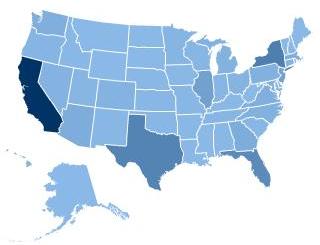
Immigrants and their children are growing shares of Kansas’s population and electorate.
Read more...

Published On: Wed, Jan 11, 2012 | Download File

Strength in Diversity: The Economic and Political Power of Immigrants, Latinos, and Asians

The Political and Economic Power of Immigrants, Latinos, and Asians in the United States (Updated January 2012)

Download the Infographic

Download the Fact Sheet (2010 Census Data)

Download the Previous Fact Sheet (2008 Census Data)


1 in 8 people in the United States is an immigrant.
Read more...

Published On: Wed, Jan 11, 2012 | Download File

Our American Immigrant Entrepreneurs: The Women

By Susan Pearce, Elizabeth Clifford and Reena Tandon

When Americans picture an immigrant entrepreneur, they likely imagine a man who began the migration of his family, later bringing his wife over to become a volunteer assistant in the shop. This image is straying farther and farther from reality as more women open their own enterprises. Yet the idea that immigrant women might be the owners and originators of some of our restaurants, motels, Silicon Valley hi-tech firms, local real-estate agencies, or other entrepreneurial ventures has yet to become conventional wisdom.

Today, immigrant women entrepreneurs abound in every region of the United States. In 2010 for example, 40 percent of all immigrant business owners were women (1,451,091 immigrant men and 980,575 immigrant women). That same year, 20 percent of all women business owners were foreign-born. These numbers indicate that there is a quiet revolution of immigrant women’s business ownership that is organically growing, but is going relatively unnoticed in the culture at large.

In this report, we asked women from a range of business sectors in several cities to tell us why and how they started their ventures, what challenges they faced, what their businesses mean to them, and what contributions they are making.­

Published On: Thu, Dec 08, 2011 | Download File

Bad for Business: How Alabama’s Anti-Immigrant Law Stifles State Economy

Although key provisions of Alabama’s HB 56 are on hold while its constitutionality is being tested in the courts, evidence is mounting of the growing fiscal and economic impact of the new law. State economic experts and business leaders agree that the law has already caused hardship for Alabama’s businesses and citizens.
Read more...

Published On: Wed, Nov 09, 2011 | Download File

Rebooting the American Dream: The Role of Immigration in a 21st Century Economy

There is plenty of evidence that immigration helps to fuel the U.S. economy, just as it has throughout our history. Immigrants continue to play an important role in the economy as workers, entrepreneurs, taxpayers, and consumers. However, most observers agree that our current immigration system is outdated and dysfunctional, making it more difficult for the U.S. to compete in the global marketplace. The last time Congress made significant changes to the employment-based immigration system was 1990, when the Immigration Act of 1990 created the five-tiered employment-based immigration system and the numerical limits used today.

Our immigration system needs to be updated and overhauled, but inflamed rhetoric often obscures reform efforts. The first step in reforming our immigration system is to understand the basic facts surrounding the debate. This report seeks to answer some basic questions about the role of immigration in today’s economy.

Read the Executive Summary

Read the Full Report

Published On: Tue, Nov 08, 2011 | Download File

Fiscally Irresponsible: Immigration Enforcement without Reform Wastes Taxpayer Dollars

Many political pundits, GOP presidential aspirants, and Members of Congress want to have it both ways when it comes to federal spending on immigration. On the one hand, there is much talk about the need for fiscal austerity, and a Congressional “super-committee” is currently working on slashing federal spending in order to reduce the deficit. On the other hand, even though the Department of Homeland Security (DHS) just announced a record high number of deportations, some still want to increase federal spending on immigration enforcement; putting more Border Patrol boots on the ground, completing the border fence, and deploying an array of high-tech gadgetry. However, they miss one very important fact: piling on more immigration enforcement without immigration reform is a practical and fiscal dead-end.

Over the past decade, the federal government has spent tens of billions of dollars trying to keep unauthorized immigrants out of the United States, or trying to get them out of the country if they are already here. The end result? Roughly 11 million unauthorized immigrants now call the United States home, the majority have been here for more than 10 years, and many have U.S.-born children. In short, the “enforcement only” approach to unauthorized immigration has proven to be costly and ineffective.Read more...

Published On: Wed, Oct 19, 2011 | Download File